Rabbi Yaakov Wolbe’s Remarks
Rabbi Aryeh Wolbe’s Remarks
Rabbi Dan Gordon’s Remarks
Dan Kullman’s Remarks
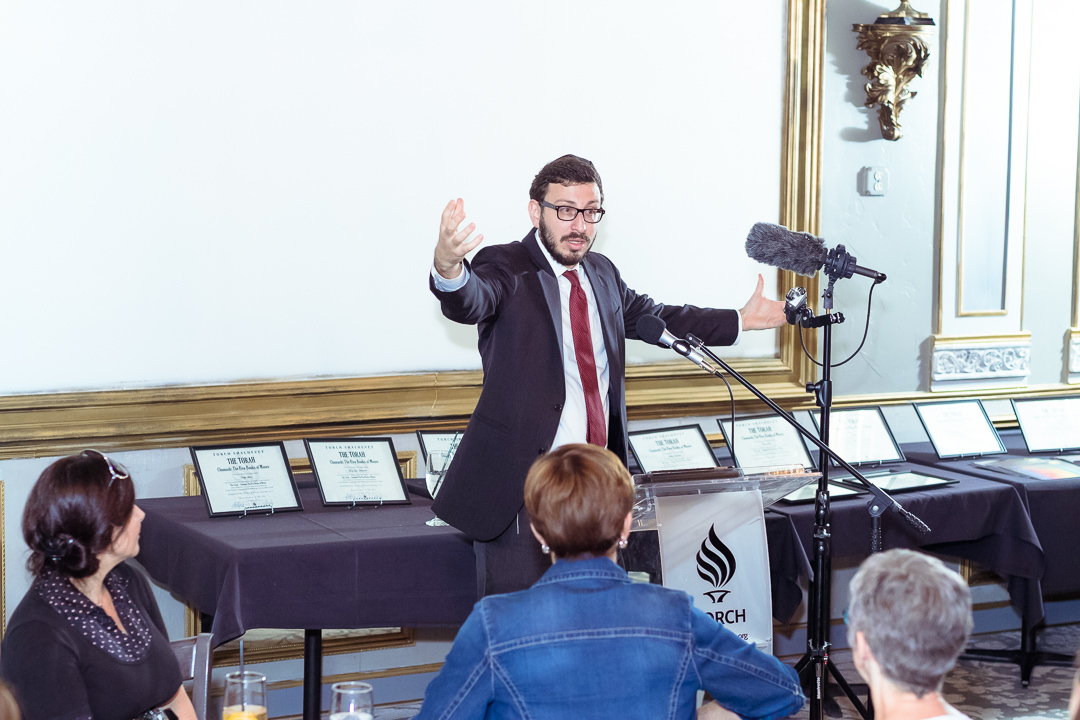

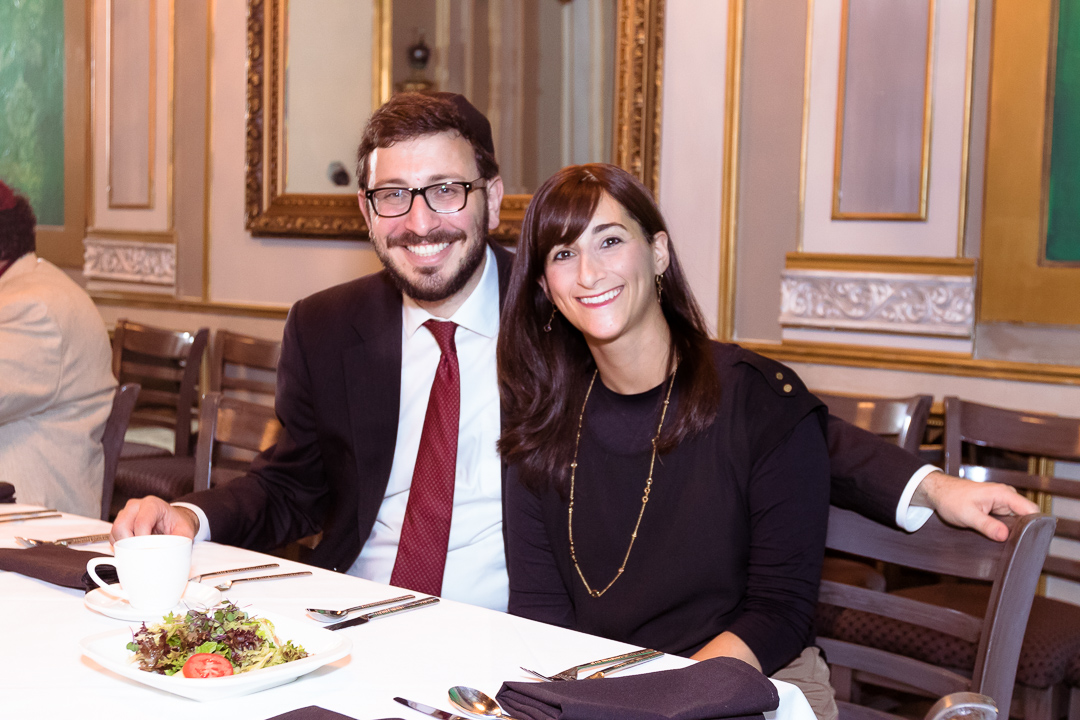
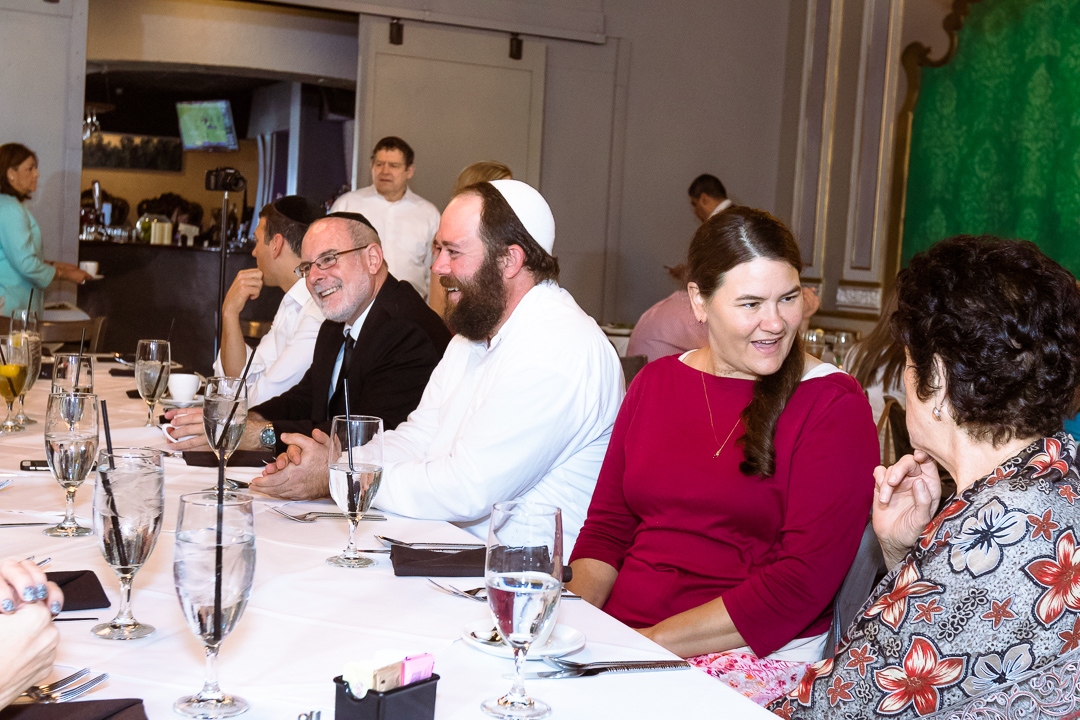


Rabbi Yaakov Wolbe’s Remarks
Rabbi Aryeh Wolbe’s Remarks
Rabbi Dan Gordon’s Remarks
Dan Kullman’s Remarks
Hurricane Harvey was one of the most powerful storms to hit the USA. Unlike most hurricanes, there was not much a risk of wind causing devastating damage, at least for Houston. Instead, the concern was rain and the resultant flooding. This was due to several factors. For one, the sheer volume of water was staggering: In a typical year Houston sees around 50 inches of rain. This slowly moving storm itself deposited around that much rain in three days. Secondly, Houston is essentially entirely flat, and the ground is less absorbent than most, and therefore the city has developed unique systems for directing and managing heavy rainfall. A network of mini rivers, called bayous, are scattered throughout the city, and direct water towards the Gulf of Mexico. Also, streets and highways have been engineered to act as water basins for times of high rates of rainfall. The idea is to deliver water to the bayous at a manageable rate and thus prevent them from overflowing. This works great provided that there is no massive storms. The hurricane was so intense, and the rainfall rate was so unprecedented, that everything failed. The roads, highways, and bayous all overflowed and flooded anything in their wake. A house’s elevation and its proximity to the nearest bayou determined if it flooded.
Thank God the neighborhood where we live is elevated and fairly far from the bayous and almost no houses were flooded. Some people lost power for a few hours (we did not lose power), the roads were impassable, but there was no significant damage. We had plenty of food and water (we stocked up in advance). In contrast, other neighborhoods that are closer to the Bayous experienced heavy catastrophic flooding. In these places, many feet of water would rush into homes. Some people had to go on the roof to avoid drowning. Sadly, the resplendant TORCH Centre suffered catastrophic damages.
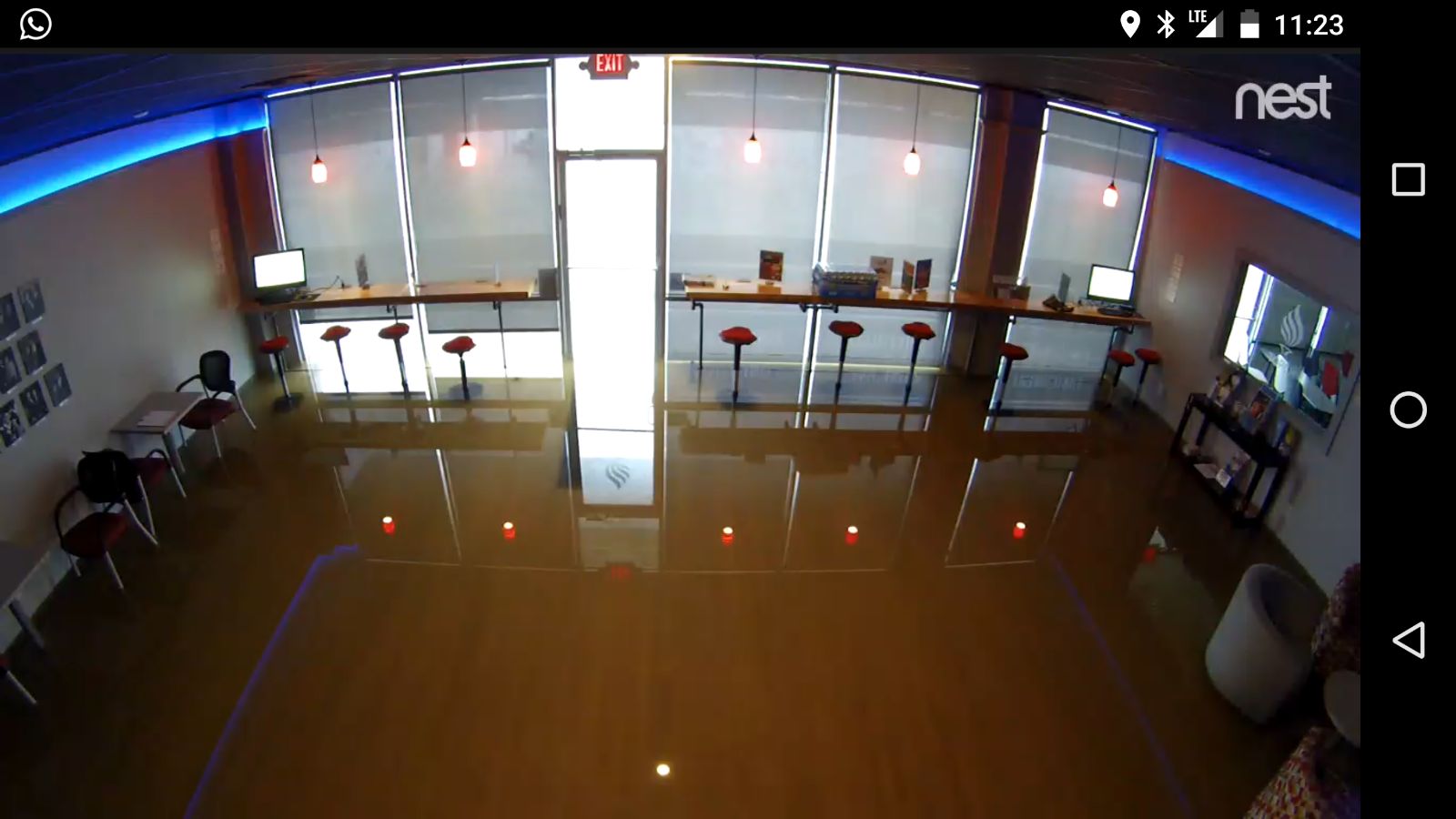
TORCH Centre security cameras capture the rising waters
The TORCH Centre during happier times

The TORCH Centre Grand Opening December 2016

Celebrating a bris at the TORCH Centre

Celebrating a double-upsherin of Shlomo Wolbe and Yitzi Wolbe
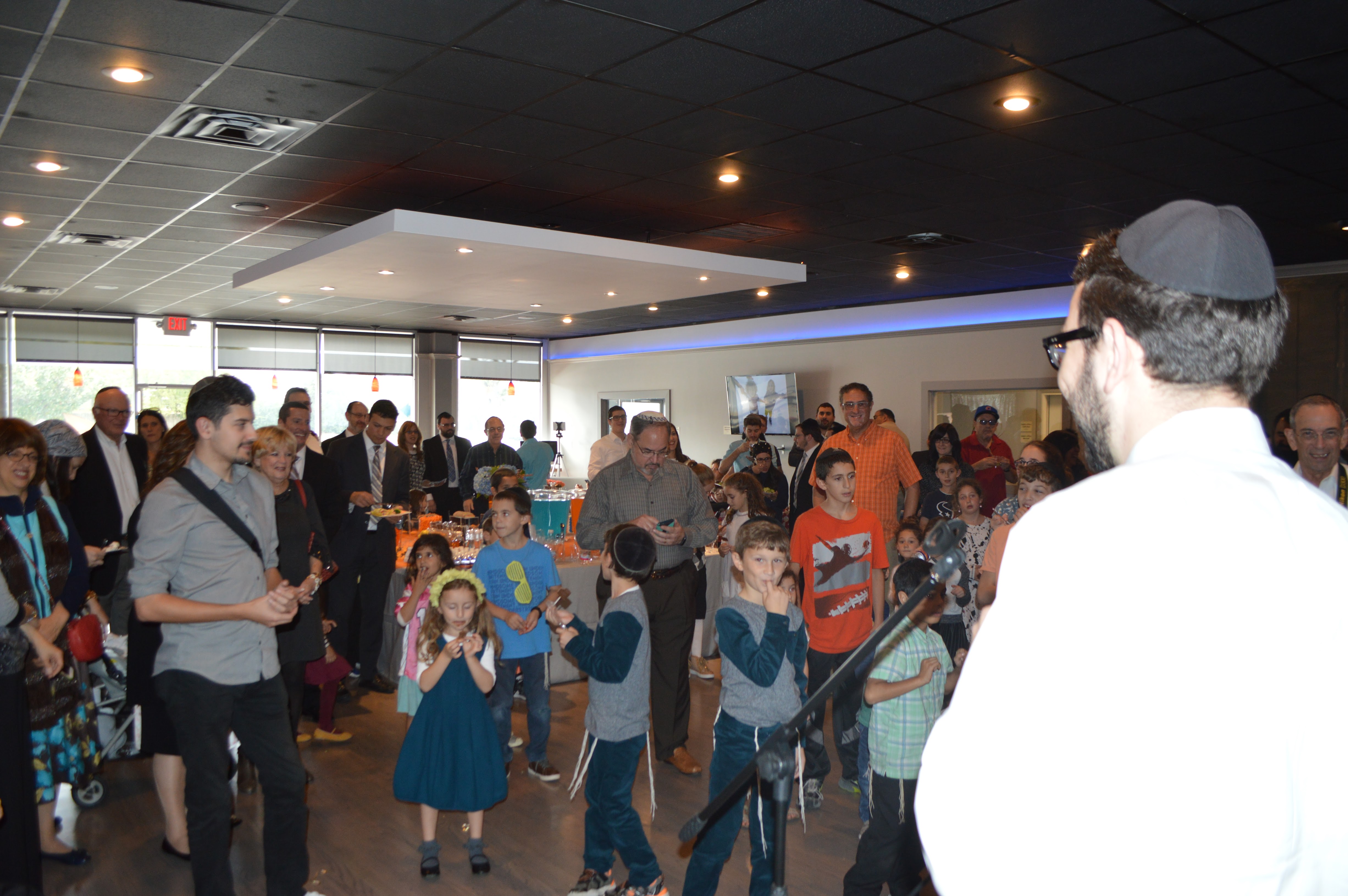
Celebrating a double-upsherin of Shlomo Wolbe and Yitzi Wolbe

Rabbi Aryeh Wolbe giving a Torah lecture
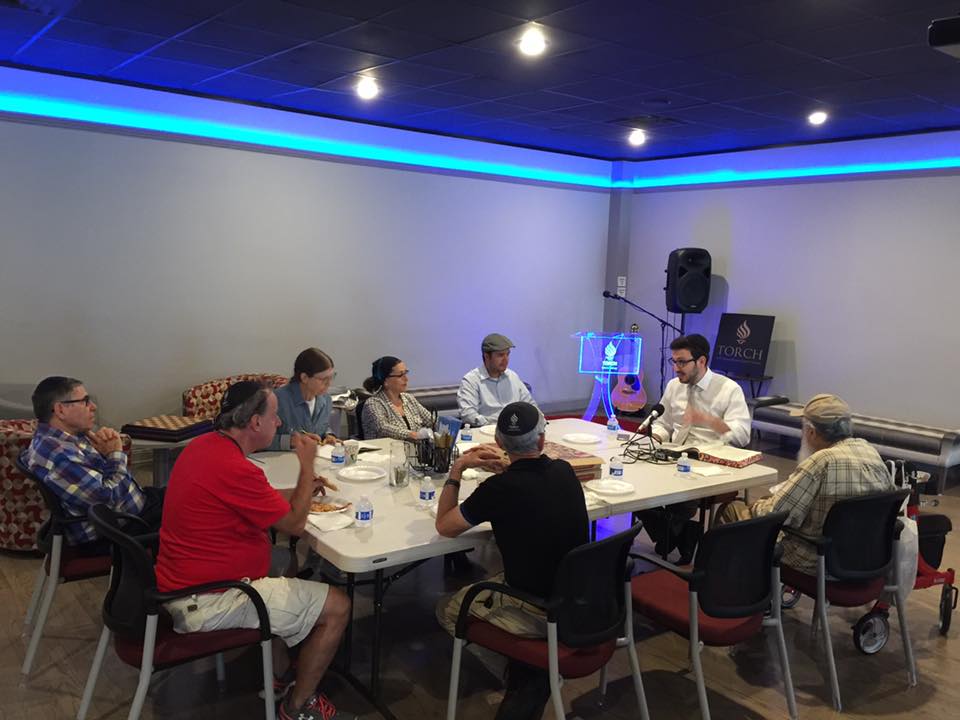
On the day before Harvey struck, I gave a Talmud lecture
On Sunday during the height of the storm, Alex Gonik and his friend Hillel waded through the raging waters and videoed the TORCH Centre
By now the waters have receded in almost every part of Houston, but the damage remains. Houston as a city, and TORCH with respect to our Centre, face a monumental rebuilding efforts, that will be long and trying, but with the Almighty’s help we will forge ahead and rebuild it better than ever.
First up: Demo
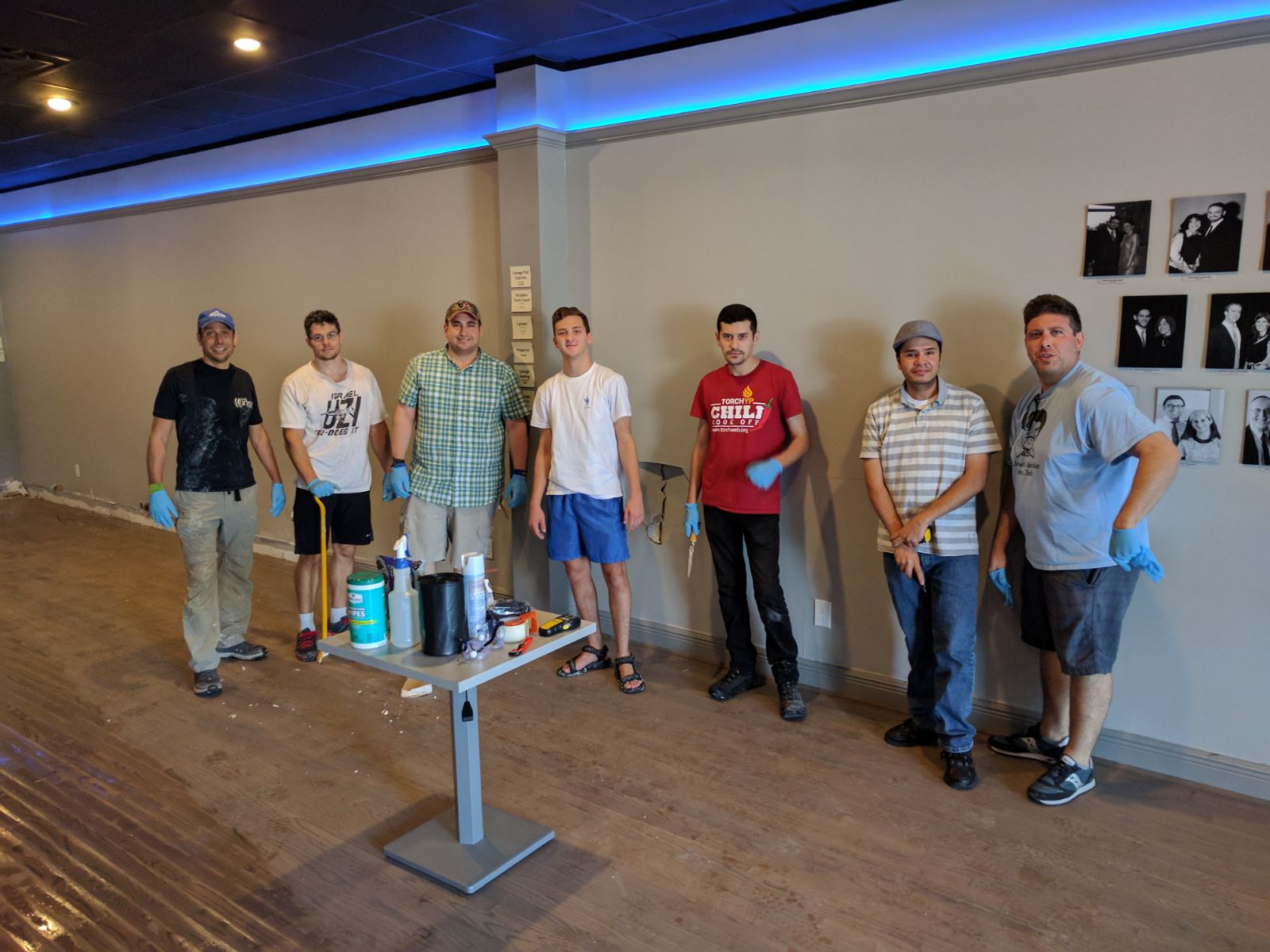
A-1 Team of Volunteers
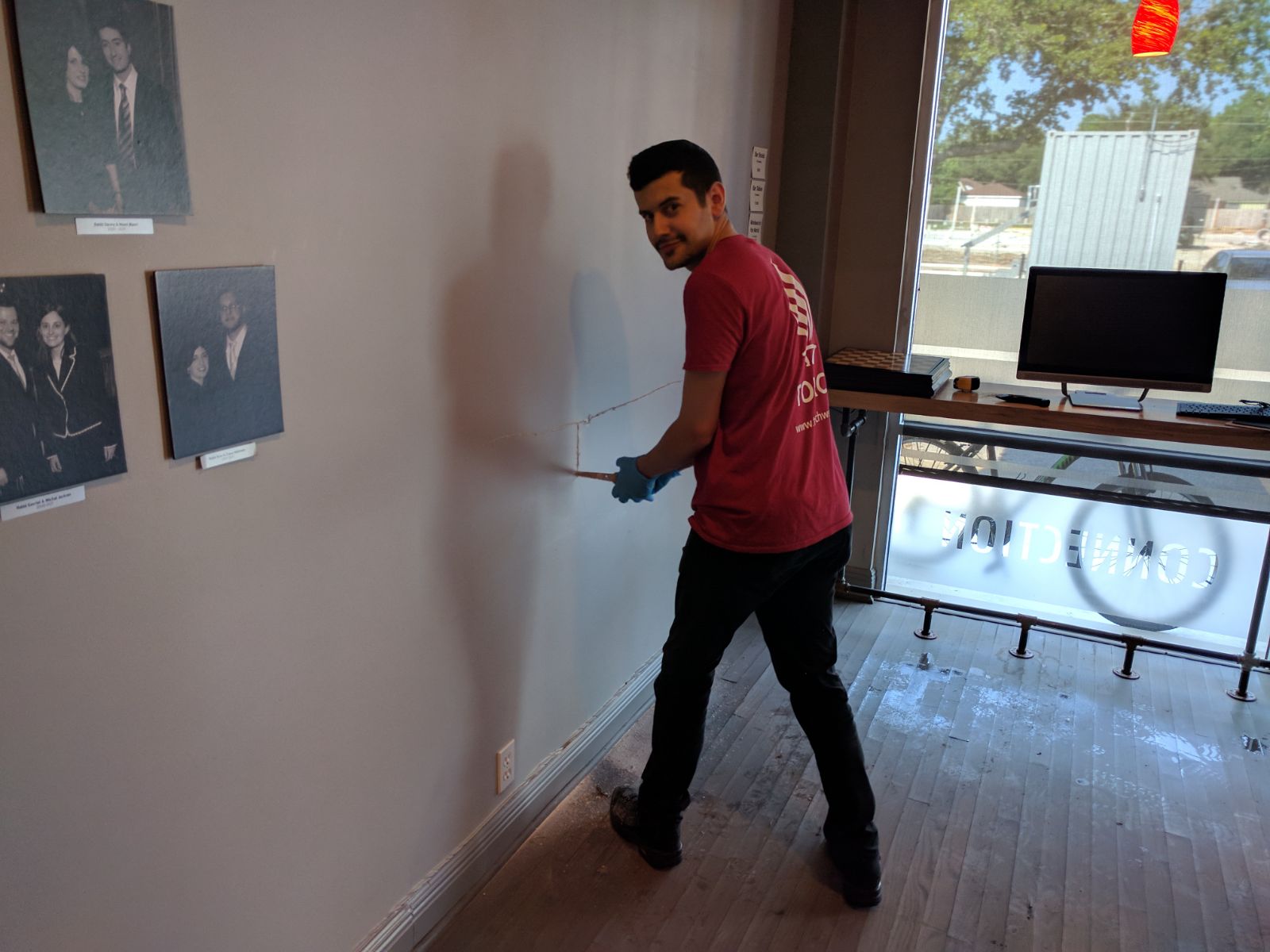
Gutting the drywall
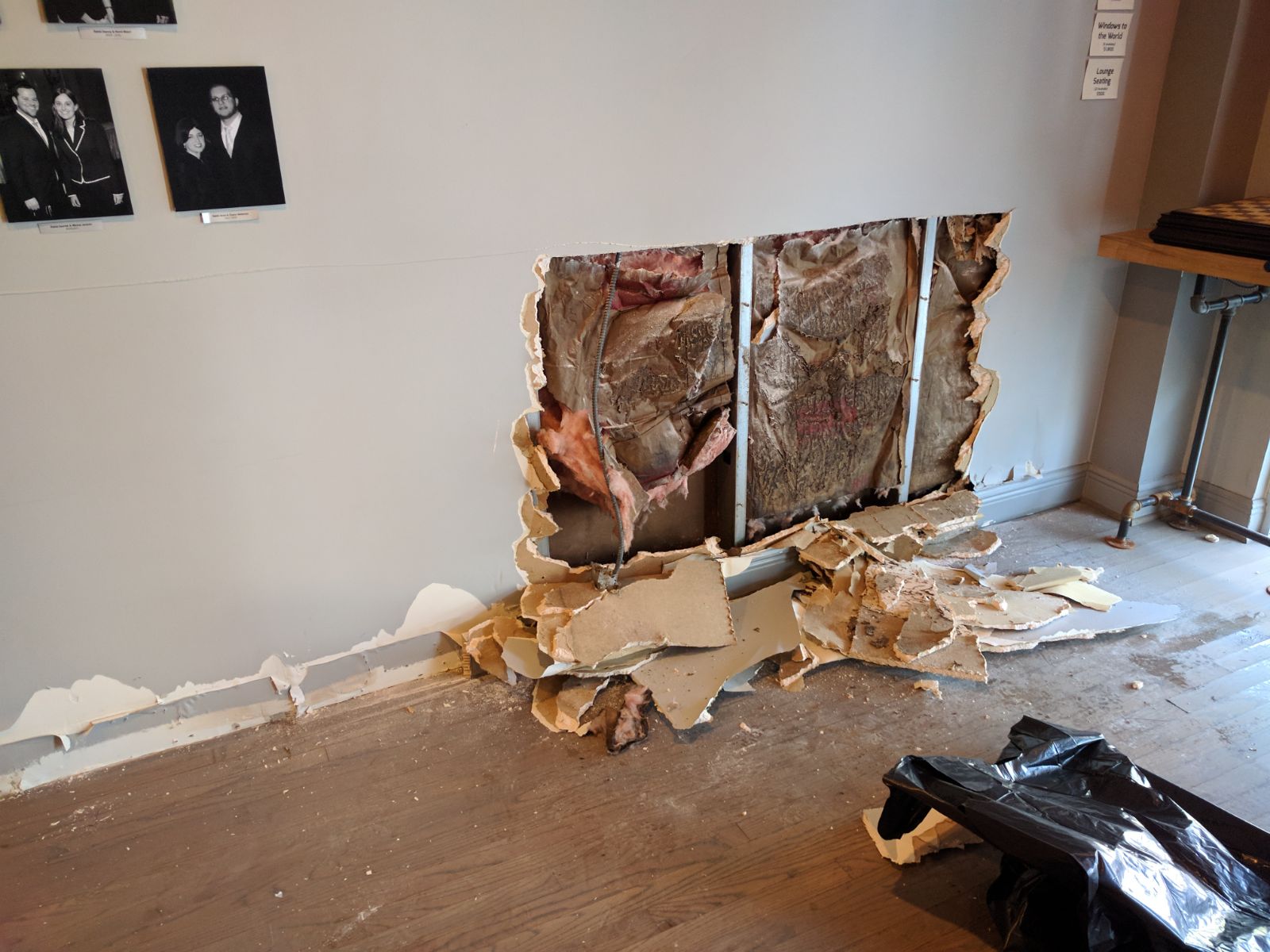
Just the beginning
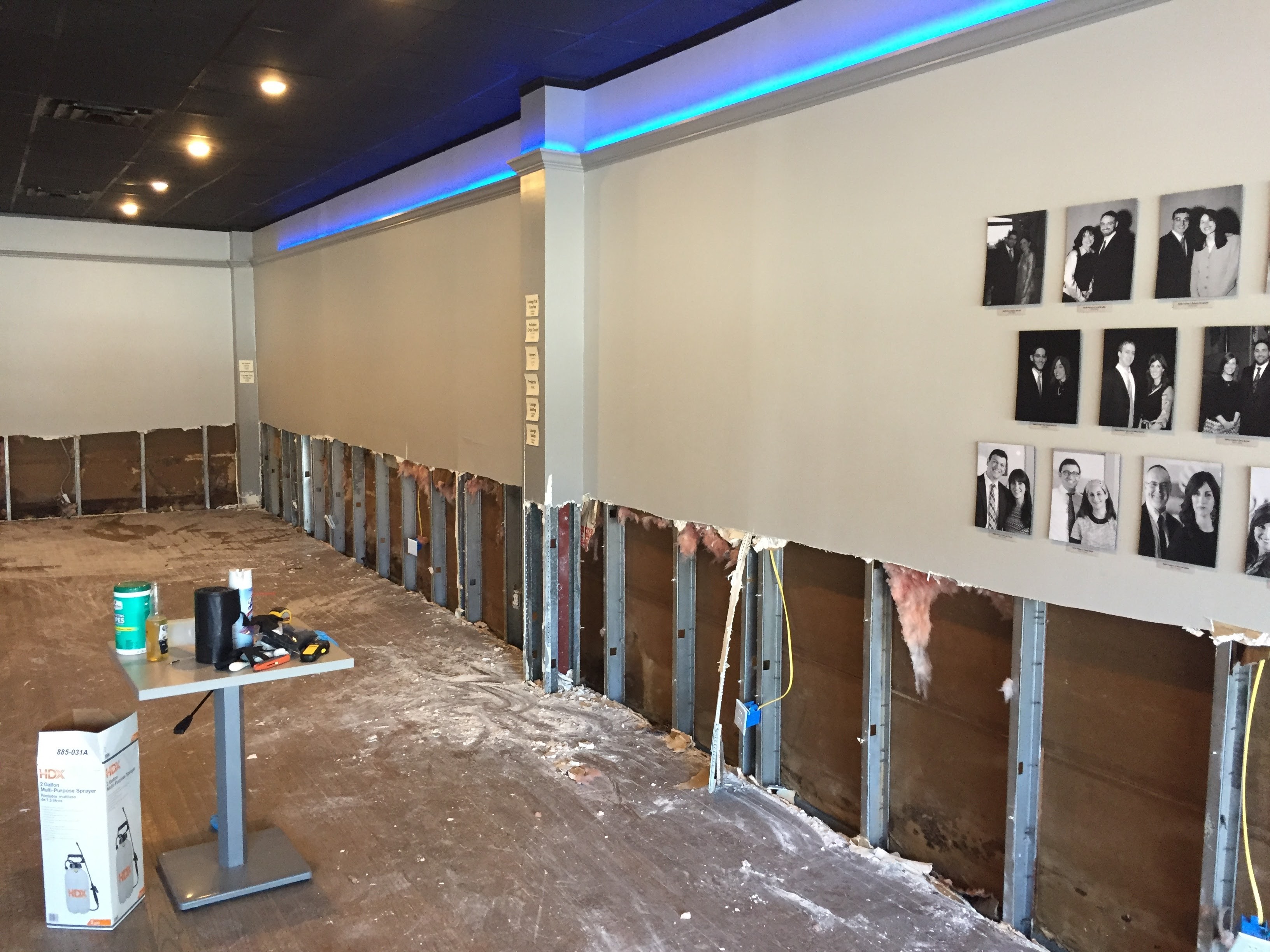
So sad

Its happening
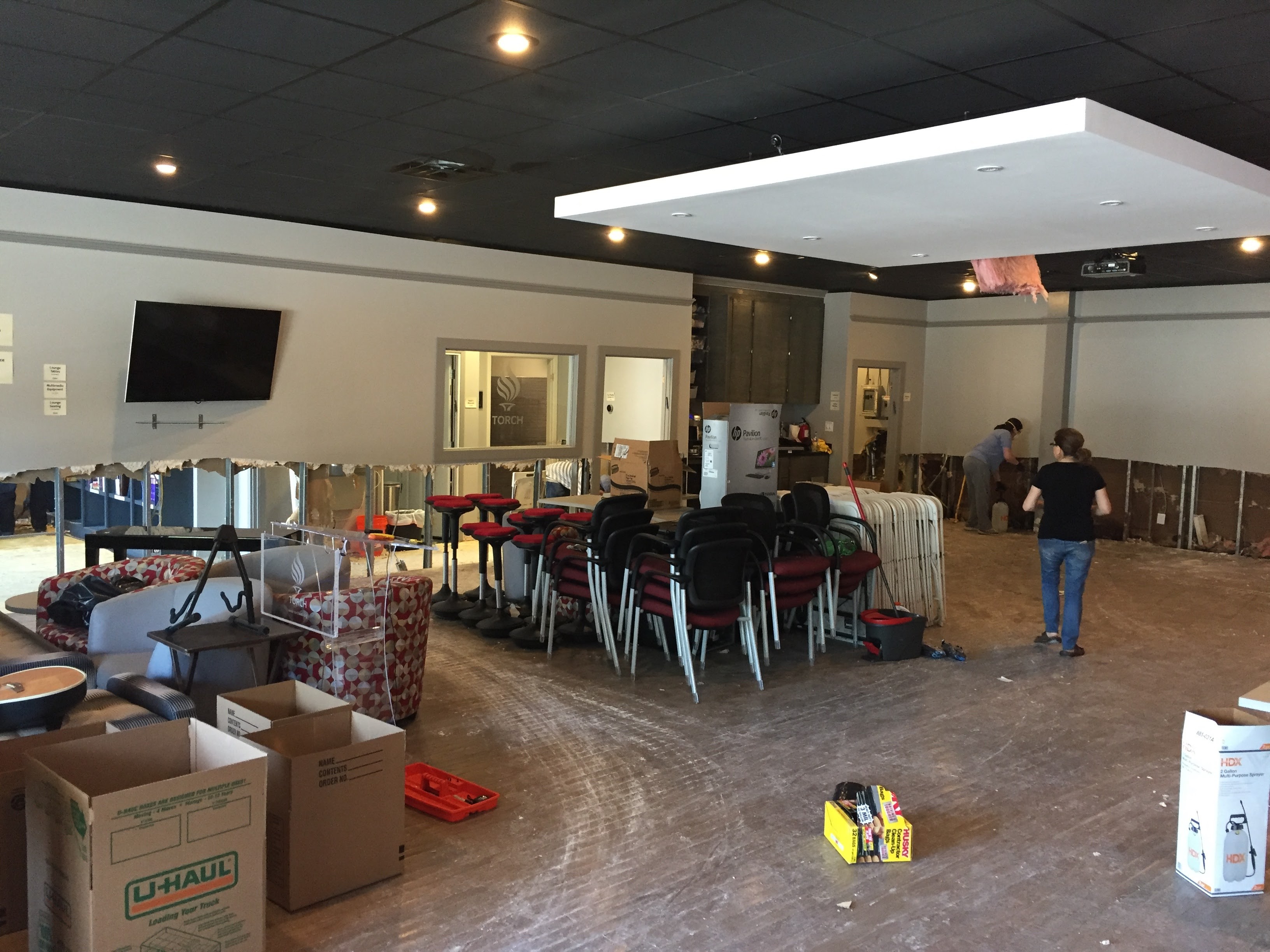
Piling up the furniture in the middle of the room
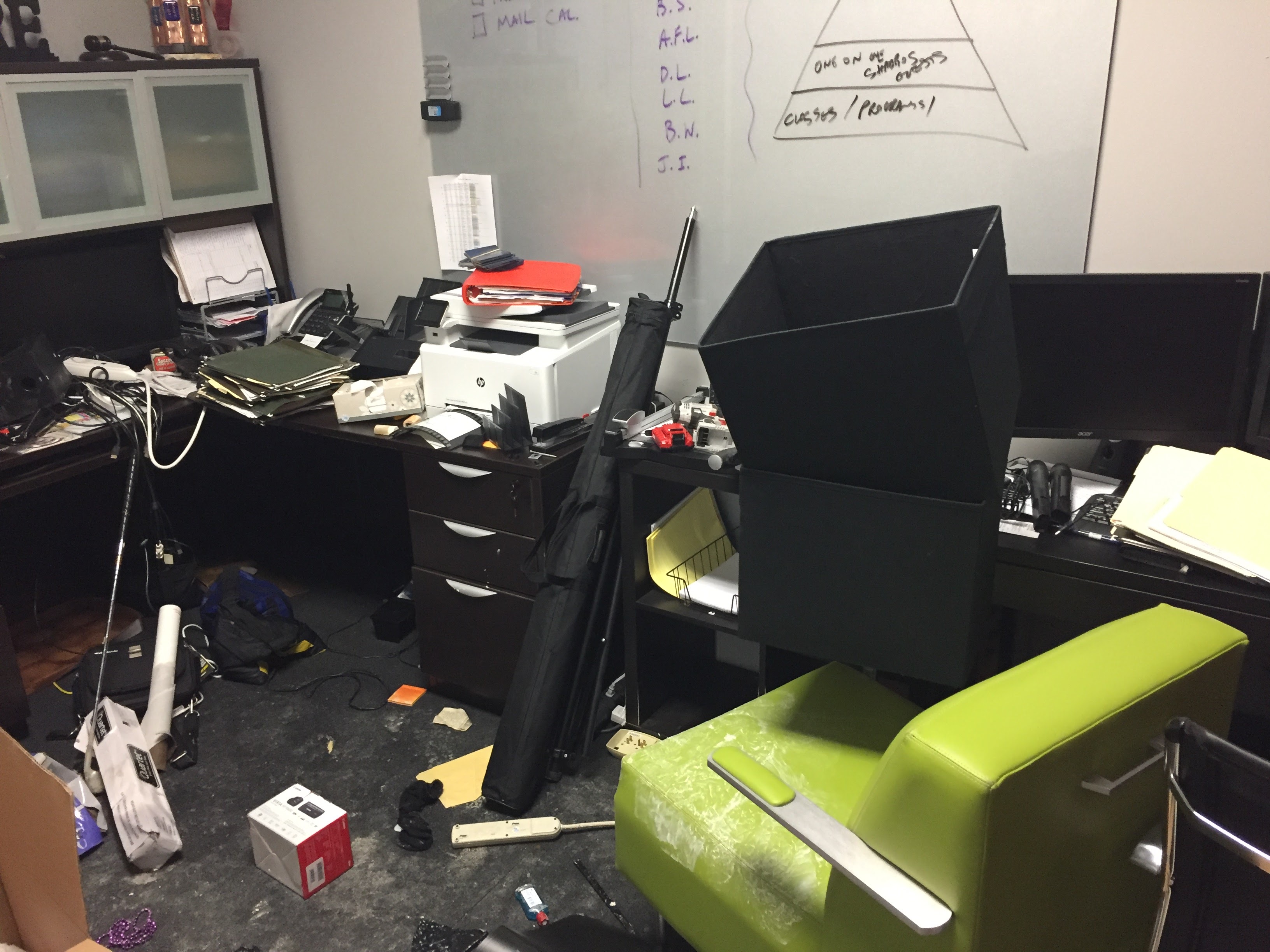
Office in disarray

It all has to come down
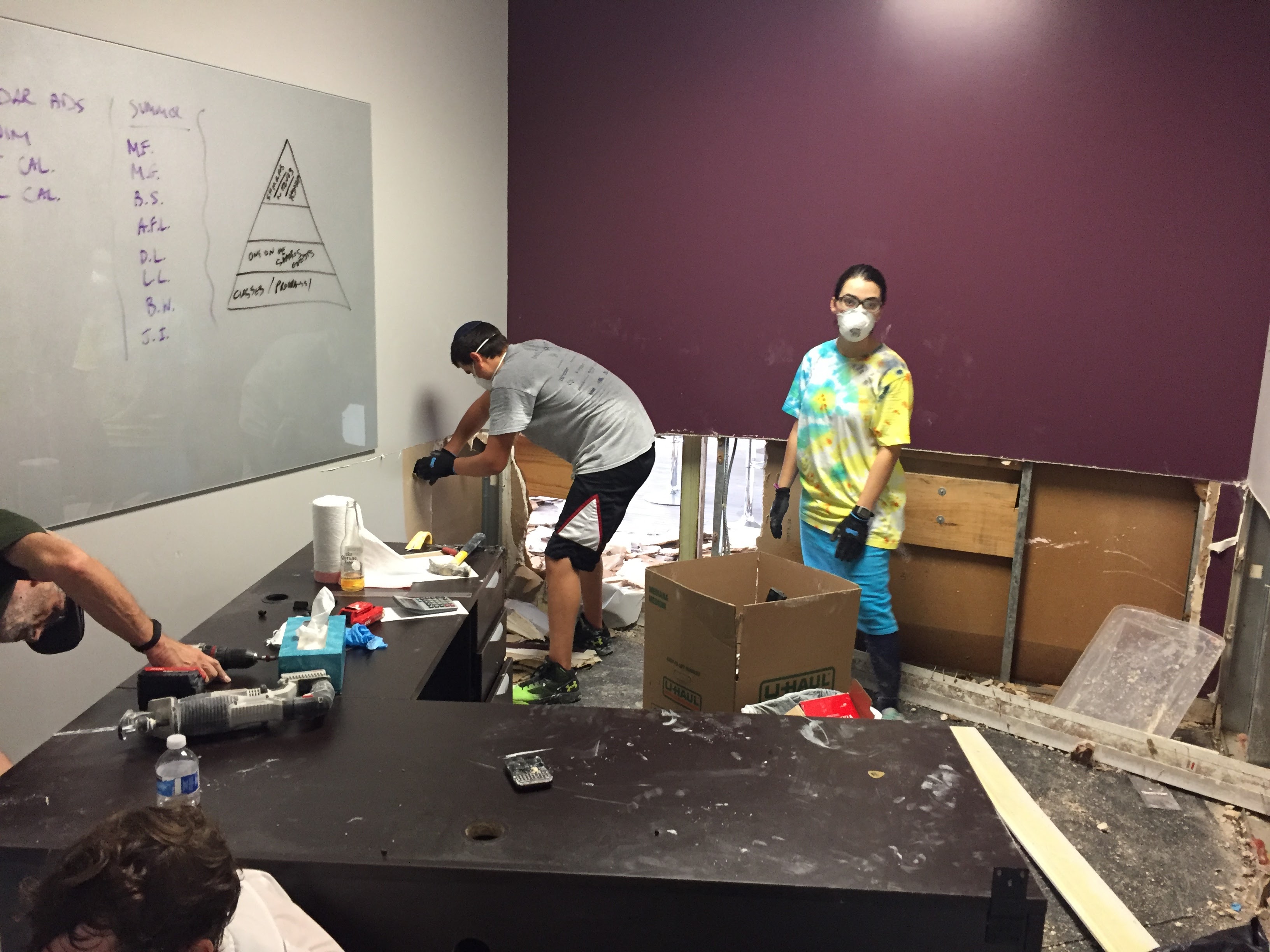
Clearing out the office
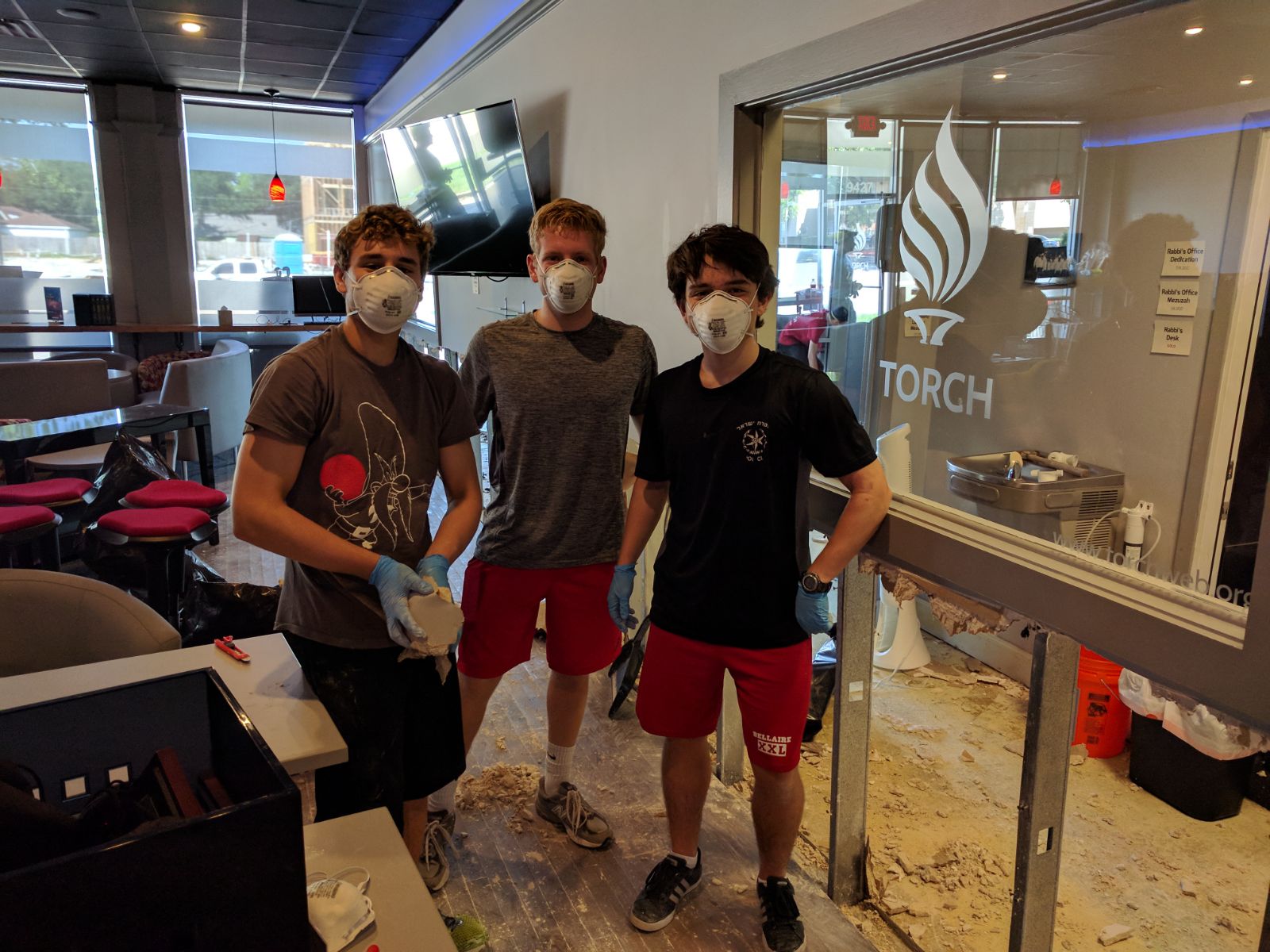
Get your masks on
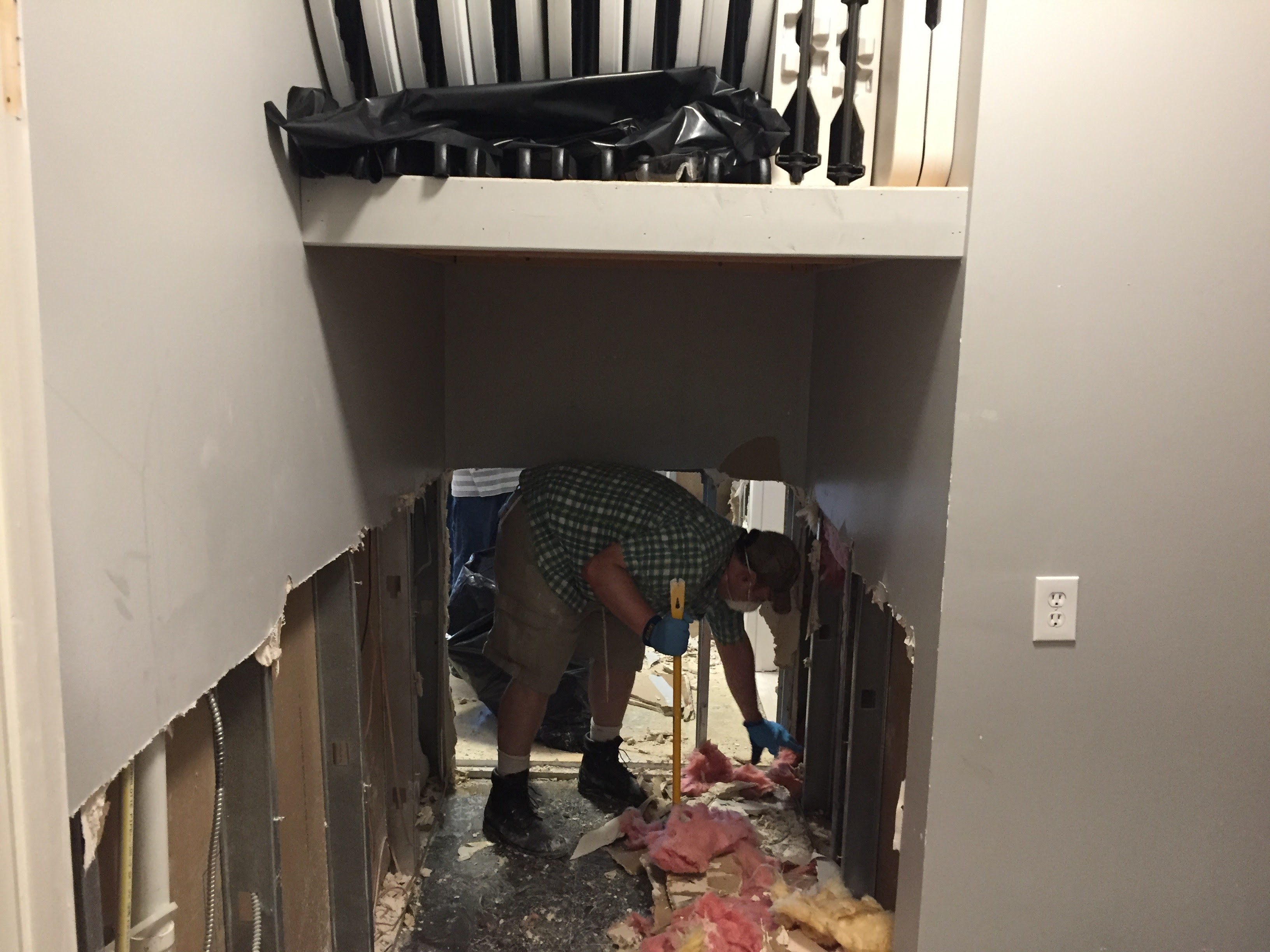
Hello
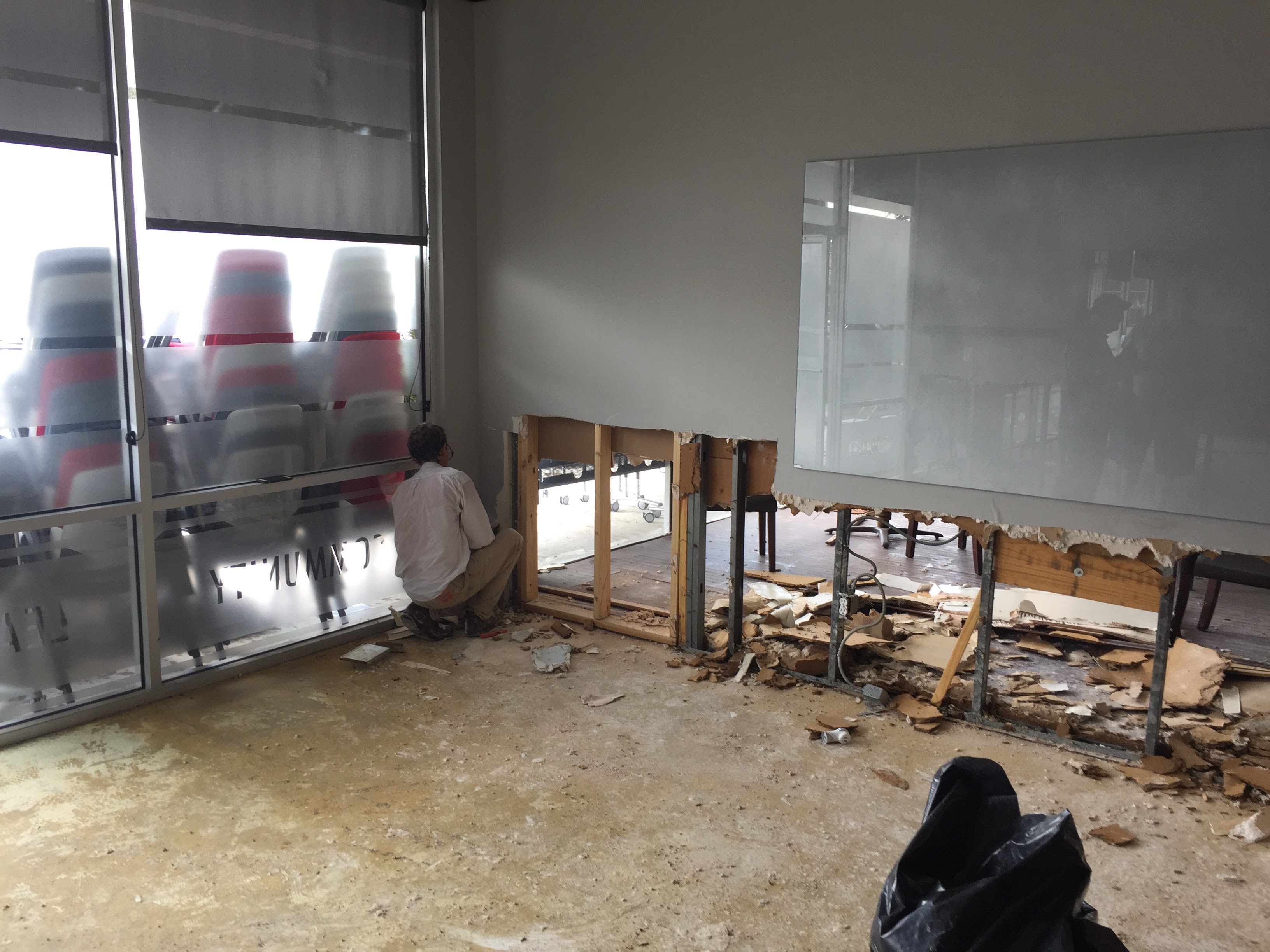
Classroom denuded of carpet and walls 🙁
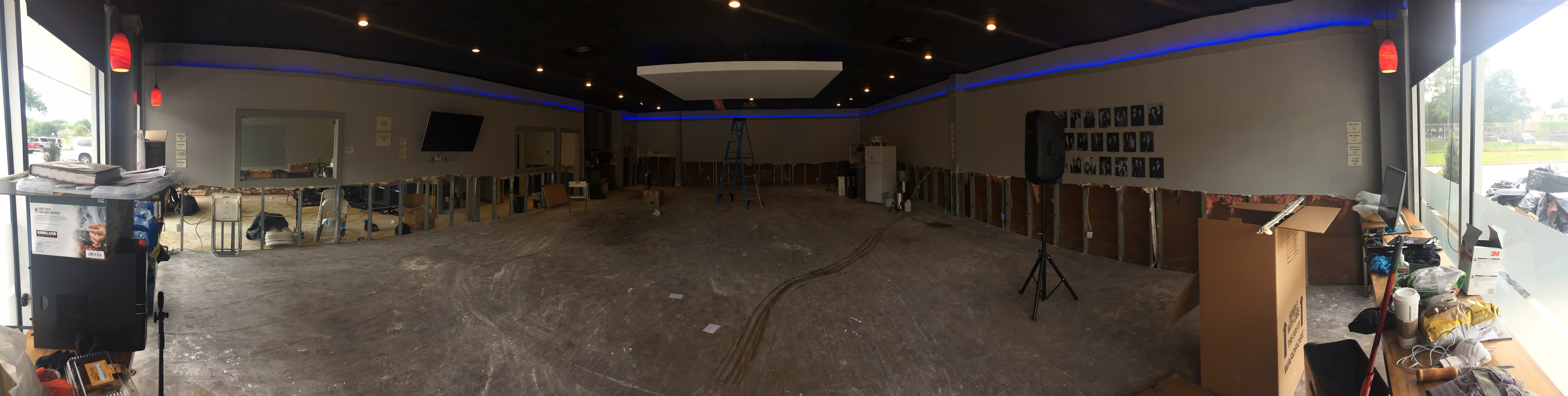
Panoramic picture of the TORCH Centre now
The outpouring of love, care, and support from all over the world in the aftermath of the hurricane has been inspiring and heartwarming. It is comforting to know that others are deeply concerned about our well being.
Please help us rebuild by making a donation at rebuildtorch.com
To support the Houston Jewish Federation’s Hurricane Harvey Relief Fund click here
Thank you!
Podcast: Download (41.2MB)
Subscribe: RSS
Eric L. Pines, Esq. is a member of the Maryland, California, and Texas State Bars, and founder of Pines Federal, a law firm specializing in Employment Law for Government and Military Employees. Mr. Pines’ firm represents federal employees from all branches of the U.S. Military (Army, Navy, Air Force) and the VA as well as other federal agencies. Mr. Pines is presently in-house counsel for a number of federal labor unions including: V.A. hospitals in Houston, Las Vegas, Amarillo, San Antonio, Albuquerque, Temple, the Corpus Christi Army Depot and Fort Hood, Texas.
Mr. Pines is also a leader in many local Jewish organizations and a member of the adjunct faculty of TORCH. He spent several years in Israel studying Torah and Jewish philosophy, with a particular emphasis on Jewish ethics. Eric is an inspiring example of an accomplished professional and small business owner who manages to integrate a robust daily regiment of Jewish learning into his busy schedule.
Eric and his wife, Joanna, are the proud parents of five adorable children.
If you are like most people, you hate the sound of your own voice. Most people would rather listen to fingernails scratching chalkboards than to a recording of a voice mail they left. Some attribute false and overly negative characterizations to the sound of their voice. Personally, I was assured many times that I was mistaken and my voice does not sound nasally and squeaky. Anecdotal research has demonstrated that many people have similarly poor self-voice-esteem. This ubiquitous phenomenon is uniquely perplexing. A person’s own voice is a sound s/he should be very familiar and comfortable with. With the possible exception of one’s spouse, there is no voice that a person hears more than his/her own. Furthermore, not a single decibel that one emits is not the product of his/her own utterance. Why is it so unsettling to hear yourself talk? What is so cringe worthy about the sound of our own voice?
The answer to this puzzling question is the same answer as to why we have trouble finding meaning on Rosh Hashana. When you hear yourself talk you are striking a chord that both unnerves and disorients: you are thinking about yourself. Your thoughts are directed inwardly; a most terrifying experiment indeed. There is no one scarier to meet than oneself. The mere sound of one’s own voice is often too frightening to bear.
Directing your thoughts inwardly is the point of departure for making Rosh Hashana meaningful. Rosh Hashana is the birthday of mankind, and therefore the day best suited for personal re-creation. It is a time when man can fundamentally refocus and reprioritize his life and experience a paradigm shift that will forever accompany him. Rosh Hashana is the most auspicious time to cast away the petty small mindedness that plagues our life, and begin living a life of purpose and meaning. It is a day when we are capable of total personal reinvention.
However, there is only one way to maximize the incredible opportunity of Rosh Hashana and that is to do what we dread most: true honest personal introspection. If we desire to utilize Rosh Hashana as a tool to propel spiritual growth it is imperative that we overcome our fears and assess, analyze and critically evaluate ourselves.
We have to look back and reflect on the year past and all the opportunities squandered. When doing so we cannot lose sight of all the isolated personal failings; every individual misdeed and mistake needs to be addressed, yet it is far more important to get a general overall accounting of who we are as a person, what are our goals in life; asking: what am I living for? In our hearts we all know that we have nearly limitless, largely unused, potential. We are all intimately aware of the fact that nothing stops us from achieving a goal that we set our minds to accomplish. The realization that we are wastefully misappropriating our talent, abilities and time is specifically what scares and depresses us. To mitigate the pain we do what humans are wired to do – avoid pain; and therefore refrain from thinking about ourselves. This tendency to avoid thinking inwardly greatly jeopardizes our ability to tap into the awesome powers of Rosh Hashana.
Rosh Hashana is the day where we can experience a personal renaissance, provided that we undergo a rigorous, likely uncomfortable, self-examination. On the Day of Judgment we have to judge ourselves as well. We have to ask ourselves and dwell upon questions like these:
These last few questions that make us ponder our death are particularly valuable because thoughts of our own demise assist our efforts of deep and genuine personal introspection. It is no coincidence that our Sages incorporated liturgical emphasis on death on Rosh Hashana. When we think about our own death we view our life differently. If the thought of one’s own death hangs over him, his outlook on life is entirely different. Thinking about our own death galvanizes us to reexamine, reframe and renew our life and priorities, and therefore it is an appropriate emotion to capture on Rosh Hashana.
The hallowed sounds of the Shofar are likewise designed to wake us up from our slumber and begin asking ourselves these life changing questions. Rosh Hashana is too vital an opportunity to sleep through.
It is ironic – or perhaps by design – that the most valuable of pursuits – contemplating one’s character, actions and life-direction – is the one we fear most. If only we can take the time to dwell on these thoughts and questions, there is no telling of the dramatic self re-creation that we can achieve.
Friends, on this Rosh Hashana let’s overcome this great fear that we all share, and truly evaluate and assess ourselves. There are no limits on what we can accomplish on Rosh Hashana if we engage in real self introspection. We can emerge a different person. Who knows, perhaps the new you will love the sound of your voice as well.