Author Archives: admin

Vayeishev – The Holy Hologram

Joseph is one of the greatest heroes of Jewish history. His greatest deed was when he resisted temptation and rebuffed the seductions of his master, Potiphar’s, wife. Our Sages tell us that thanks to this valorous deed, Joseph became the viceroy of Egypt and merited to sustain the entire world! The Midrash tells us that the Splitting of the Sea was due to Joseph’s gallantry. How did Joseph muster up the courage to resist the Yetzer Hara’s onslaught? The Talmud gives a very interesting answer.

– – – – – – – – – – – – – – – – – – – – – –

Please email me at rabbiwolbe@gmail.com with any questions or comments

TORCH Shabbat Light Switch Cover

Please visit our website torchweb.org to get your FREE TORCH Shabbat Light Switch Cover.

or CLICK this LINK to access the form directly

https://docs.google.com/forms/d/e/1FAIpQLSd6A90DO9YIzUXxlHH3EEy5dz_H5mlch-N3GZdqtG9saMlYsA/viewform

SUBSCRIBE to my Newsletter

rabbiwolbe.com/newsletter

– – – – – – – – – – – – – – – – – – – – – –

Sponsorship: Please consider sponsoring a podcast by making a donation to help fund our Jewish outreach and educational efforts at https://www.torchweb.org/support.php. Thank you!

SUBSCRIBE to Rabbi Yaakov Wolbe’s Podcasts

The Parsha Podcast

The Jewish History Podcast

The Mitzvah Podcast 

This Jewish Life

The Ethics Podcast

TORAH 101

The Shabbat Dinner: Customs, Rituals, and Practices

Shabbat is the beating heart of the Jewish family and the Jewish week. It is the portal through which the spiritual vitality for the entire week flows. This podcast idea was proposed in my email newsletter (visit rabbiwolbe.com/newsletter to subscribe). I had thrown out the idea of going through a Shabbat dinner and detailing all the practices that happen and why we do them – both as a way of enlightening people who are doing Shabbat dinner already and as a way of preparing someone who is about to partake in their first traditional Shabbat dinner. I tried to accomplish a lot of things in one episode and I truly hope it is valuable and useful to you!

– – – – – – – – – – – – – – – – – – – – – –

Please email me at rabbiwolbe@gmail.com with any questions or comments

TORCH Shabbat Light Switch Cover

Please visit our website torchweb.org to get your FREE TORCH Shabbat Light Switch Cover.

or CLICK this LINK to access the form directly

https://docs.google.com/forms/d/e/1FAIpQLSd6A90DO9YIzUXxlHH3EEy5dz_H5mlch-N3GZdqtG9saMlYsA/viewform

SUBSCRIBE to my Newsletter

rabbiwolbe.com/newsletter

– – – – – – – – – – – – – – – – – – – – – –

Sponsorship: Please consider sponsoring a podcast by making a donation to help fund our Jewish outreach and educational efforts at https://www.torchweb.org/support.php. Thank you!

SUBSCRIBE to Rabbi Yaakov Wolbe’s Podcasts

The Parsha Podcast

The Jewish History Podcast

The Mitzvah Podcast 

This Jewish Life

The Ethics Podcast

TORAH 101

A Celebratory Week! (Issue #3 – 12/03/2020)

When people thank me for producing my podcasts, I always feel that I should be thanking them! It has been a true blessing of a lifetime and immensely gratifying for me to be able to teach Torah on a global scale and to become friends with so many incredible and talented and amazing people. Our nation is composed of such wonderful people, and it is the greatest honor that I get to witness a slice of some of this brilliance and genius and wonderfulness firsthand.

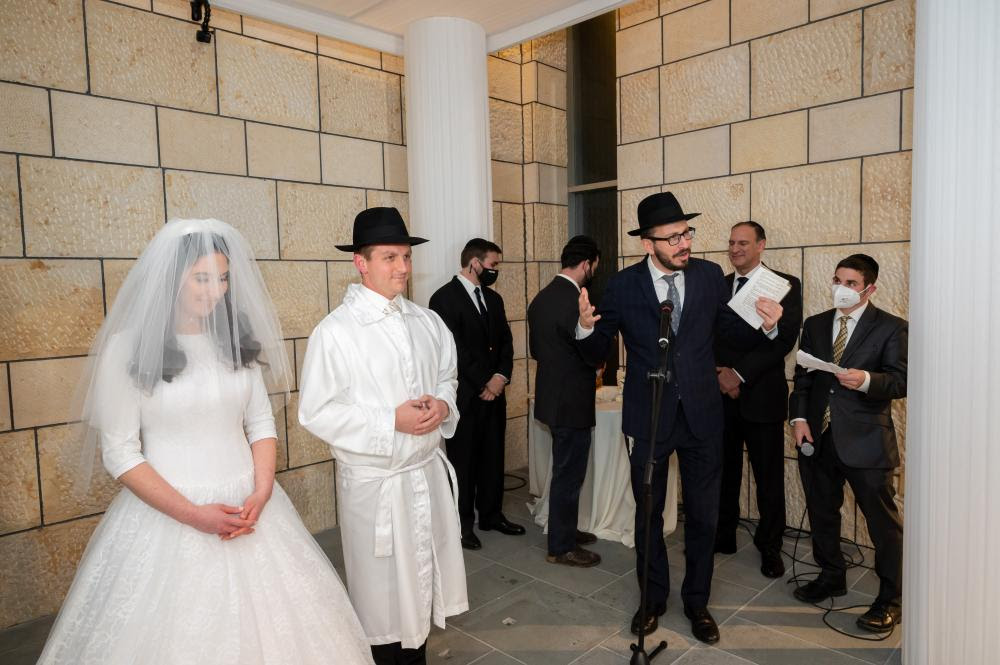
This joy and delight reached a fever pitch this past week when I was honored to officiate at the wedding of David and Chana Borowsky.

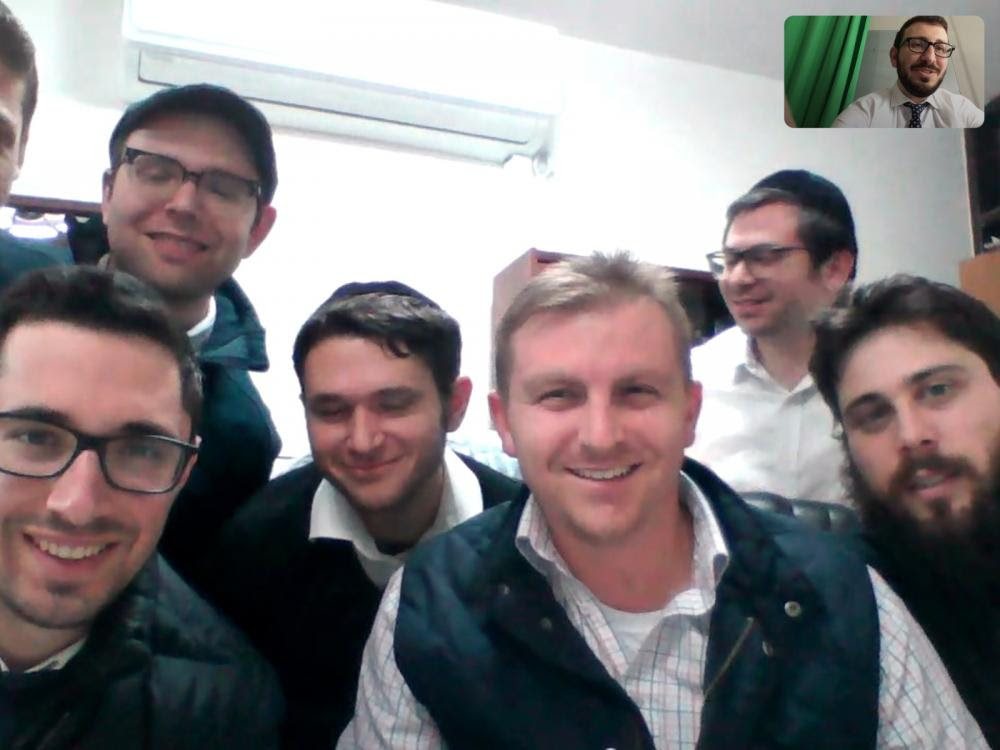
David was a listener of my podcasts when he, together with other members of his community in Harrisburg, PA, invited me to deliver a series of lectures in December of 2017. Over the course of my 24 hour visit, I gave three lectures (you can listen to them here, here, and here), and David and I really became close friends. We maintained our relationship afterwards, and began studying together over Skype. David is a brilliant young man, and I proposed to him to consider spending some time in yeshiva in Israel for a couple of months, explaining that the marriage between his incredible brain and advanced Talmud study would be absolutely symphonic. David ended up at Machon Shlomo, a yeshiva for the best and the brightest young minds of our nation. After spending a few months there, he emailed me and told me how there were a bunch of the students there who were also listeners of my podcasts (the yeshiva is full of bright and talented students, after all) and asked if I would be willing to give them a lecture over FaceTime. I agreed, of course, and we had a great discussion in which I shared with them reflections, stories, and lessons of my grandfather, Rabbi Shlomo Wolbe. (it can be found here). After the discussion, I snapped a screenshot from my iPad.

Fast forward a couple of months. COVID hits, David returns to the States, he gets engaged to Chana, and invites me to officiate at the wedding.

People who know me know that I have an unfortunate weakness for microphones. When I saw that gorgeous microphone under the Chuppah, I just couldn’t stop talking! I hope I didn’t pontificate and drone on for too long! Thank you so much for inviting me to your wedding and for asking me to officiate. It was a true honor!

Mazal Tov David and Chana! May you share a wonderful life together and experience only happiness and joy and harmony and prosperity, and may you build a beautiful Jewish home together!

I always view the podcast audience as a big, globally distributed family. When there is a celebration in the lives of one of us, it is a joyous occasion for us all!


In addition to David and Chana, more podcast listeners got married this past week: Mazal Tov Michael and Daniella Rosen! May you share a life of nothing but joy and happiness together!

Things I am thinking about – Modern Insights in the Ancient Literature

One of the things that always intrigues me is when scientists, sociologists, and scholars in the greater world discover truths that are found in the Torah and ancient Jewish literature and have been part of the collective knowledge of our people for many centuries.

We believe that the Torah is the Almighty’s wisdom and the rules of nature and physics are His handiwork. Both the Torah and the world originate in the same source and it should come as no surprise, therefore, that they are going to mirror each other in all kinds of ways.

When we look at this week’s Parsha and the encounter between Jacob and his brother Esau, we find some examples of this. When Jacob sent his gifts to his brother as a bribe to quell his violent plans, he didn’t send them all at once. Instead, he divided the gift into many parts and spaced them out. Rashi explains that he did that in order to maximize the impact that it would have on Esau. You receive a gift, and it seems like that’s it, but then something else comes! And then something else and then something else! The way it is processed psychologically, Rashi tells us, is that the impact of the spaced out gift is amplified because each part of the gift creates a new excitement.

Whenever I read this I think of the study that was made recently with respect to waiters. Waiters of course always try to maximize the tips that they receive. They are thus incentivized to treat the patrons well in order to elicit a larger gratuity. So someone made a study that showed that when the waiter delivered a mint or a candy with the bill it raised the average tip size by 3% over the control group. When there were multiple mints or candies then the tip size grew on average by 14%. But here is what garnered the largest tips: when the waiter gave one mint and then left and then came back with a second one – when the gift was spaced out. Apparently, Jacob already knew the results of this study when he gave his gift to Esau organized in a way that’s most likely to bring about positive reciprocity

When Jacob prepares for conflict, he splits his people into two camps, saying that if Esau decimates one the other will survive. To me the sounds like the principle that we used in modern times called diversification. You don’t want to expose all of your assets to risk. Interestingly, the Talmud (Bava Metzia 42a) describes the ideal asset allocation of a diversified portfolio that is still today used by money managers the world over.

Obviously, these examples are two relatively minor ones, but something I am thinking about is how Torah is much more than ancient wisdom; it contains all the secrets of the world. We can discover truths about the world both from the Almighty’s mind and His handiwork.

Vayishlach – Unrequited Love

This a unique edition of The Parsha Podcast that you dont want to miss. Instead of the usual one big idea that we typically cover in a Parsha podcast, in this version there are FIVE groundbreaking insights that can change your life. We learn about a remarkable staff and its powers, about the pliability of sunshine hours, about the kabbalistic result of Dina’s encounter with Shechem, about the Torah’s view on prayer, and about the mysterious origin of Amaleik. This episode is a dandy.

– – – – – – – – – – – – – – – – – – – – – –

Please email me at rabbiwolbe@gmail.com with any questions or comments

TORCH Shabbat Light Switch Cover

Please visit our website torchweb.org to get your FREE TORCH Shabbat Light Switch Cover.

or CLICK this LINK to access the form directly

https://docs.google.com/forms/d/e/1FAIpQLSd6A90DO9YIzUXxlHH3EEy5dz_H5mlch-N3GZdqtG9saMlYsA/viewform

SUBSCRIBE to my Newsletter

rabbiwolbe.com/newsletter

– – – – – – – – – – – – – – – – – – – – – –

Sponsorship: Please consider sponsoring a podcast by making a donation to help fund our Jewish outreach and educational efforts at https://www.torchweb.org/support.php. Thank you!

SUBSCRIBE to Rabbi Yaakov Wolbe’s Podcasts

The Parsha Podcast

The Jewish History Podcast

The Mitzvah Podcast 

This Jewish Life

The Ethics Podcast

TORAH 101

#38: What is Halacha?

With all the development and codification of Oral Torah that went into the Talmud, one areas was still incomplete: Halacha. Halacha refers to the practical application of Torah law, and despite the tremendous efforts invested in the Talmud in clarifying all the Torah laws, only an accomplished scholar would be able to extract the practical halacha from the Talmud. It is too confusing, it is too cumbersome, it is too vast, it is written in a terse, intricate way, the language is foreign; distilling the practical halacha from the Talmud is monstrously difficult. But thankfully, some of the greatest minds in history dedicated their lives to doing that for all of us. This podcast is the story of the writing and codification of Halacha.

– – – – – – – – – – – – – – – – – – – – – –

This TORAH 101 podcast is sponsored in honor of Dina Bat Esther by her family. We thank them for their support of TORCH and the TORCH Podcasts.

– – – – – – – – – – – – – – – – – – – – – –

Please email me at rabbiwolbe@gmail.com with any questions or comments

TORCH Shabbat Light Switch Cover

Please visit our website torchweb.org to get your FREE TORCH Shabbat Light Switch Cover.

or CLICK this LINK to access the form directly

https://docs.google.com/forms/d/e/1FAIpQLSd6A90DO9YIzUXxlHH3EEy5dz_H5mlch-N3GZdqtG9saMlYsA/viewform

SUBSCRIBE to my Newsletter

rabbiwolbe.com/newsletter

– – – – – – – – – – – – – – – – – – – – – –

Sponsorship: Please consider sponsoring a podcast by making a donation to help fund our Jewish outreach and educational efforts at https://www.torchweb.org/support.php. Thank you!

SUBSCRIBE to Rabbi Yaakov Wolbe’s Podcasts

The Parsha Podcast

The Jewish History Podcast

The Mitzvah Podcast 

This Jewish Life

The Ethics Podcast

TORAH 101

Vayeitzei – Laban’s Potion

As the father of all four of Jacob’s wives, Laban is in effect the father in law of the Jewish people. If we examine Laban’s story, he seems to have both qualities and shortcomings. He is constantly invoking God, he seems to be gracious and hospitable. But he also had a dark side. He is greedy and rapacious and deceptive, he is not exactly trustworthy. If we had to make an evaluation of Laban, he would get a mixed results. But the Torah’s verdict is much more stark: Laban is labeled as a super villain, worse than Pharaoh. In this podcast we speculate as to why Laban is so deadly.

– – – – – – – – – – – – – – – – – – – – – –

This Parsha Podcast is sponsored by my dear friend and loyal podcast listener, Michael Rosen in honor of his marriage this week to Daniella. On behalf of the entire Parsha Podcast family, I would like to extend my warmest blessings to the young couple. May they share a life of happiness and joy and harmony and peace, and may they build an amazing Jewish home together!

– – – – – – – – – – – – – – – – – – – – – –

Please email me at rabbiwolbe@gmail.com with any questions or comments

TORCH Shabbat Light Switch Cover

Please visit our website torchweb.org to get your FREE TORCH Shabbat Light Switch Cover.

or CLICK this LINK to access the form directly

https://docs.google.com/forms/d/e/1FAIpQLSd6A90DO9YIzUXxlHH3EEy5dz_H5mlch-N3GZdqtG9saMlYsA/viewform

SUBSCRIBE to my Newsletter

rabbiwolbe.com/newsletter

– – – – – – – – – – – – – – – – – – – – – –

Sponsorship: Please consider sponsoring a podcast by making a donation to help fund our Jewish outreach and educational efforts at https://www.torchweb.org/support.php. Thank you!

SUBSCRIBE to Rabbi Yaakov Wolbe’s Podcasts

The Parsha Podcast

The Jewish History Podcast

The Mitzvah Podcast 

This Jewish Life

The Ethics Podcast

TORAH 101

#37: What is Aggadah?

The Talmud is comprised of two general formats: The Halachic portions (known in Talmudic parlance as, “shemaytza“), and the non-Halachic portions which are called “Aggadah”, or “Aggadata” or “Hagada”. These two parts of the Talmud cannot be more different: whereas in the Halachic portions the objective of the authors was to reveal their true meaning, in the Aggadic portions the objective was to conceal the true meaning. What is included in the Aggadah? Why was it written in this cryptic way? What are some examples of Aggadic teachings? How, indeed, must it be studied? In this comprehensive introduction to Aggadah we learn the answers to these and other questions.

– – – – – – – – – – – – – – – – – – – – – –

Please email me at rabbiwolbe@gmail.com with any questions or comments

TORCH Shabbat Light Switch Cover

Please visit our website torchweb.org to get your FREE TORCH Shabbat Light Switch Cover.

or CLICK this LINK to access the form directly

https://docs.google.com/forms/d/e/1FAIpQLSd6A90DO9YIzUXxlHH3EEy5dz_H5mlch-N3GZdqtG9saMlYsA/viewform

SUBSCRIBE to my Newsletter

rabbiwolbe.com/newsletter

– – – – – – – – – – – – – – – – – – – – – –

Sponsorship: Please consider sponsoring a podcast by making a donation to help fund our Jewish outreach and educational efforts at https://www.torchweb.org/support.php. Thank you!

SUBSCRIBE to Rabbi Yaakov Wolbe’s Podcasts

The Parsha Podcast

The Jewish History Podcast

The Mitzvah Podcast 

This Jewish Life

The Ethics Podcast

TORAH 101

Pedagogical Triage (Issue #2 – 11/19/2020)

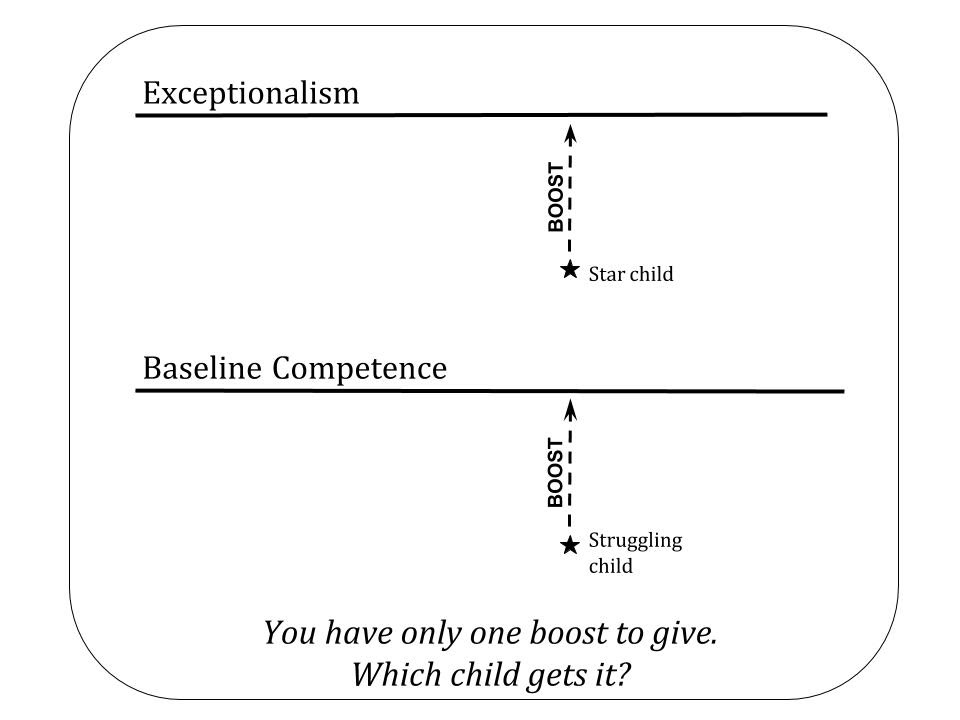
Suppose you have two children: One is a star. Bright, precocious, gifted in every way – clearly has a bright future ahead of them. The other is struggling. There are all sorts of challenges and difficulties hampering their ability to succeed. Now imagine that you have the resources to help only one of them. You cannot help both of them, you can only help one. Which do you choose to boost? Do you try to supercharge the precocious child to give them the best chance to catapult to the next level, or do you help the struggling child not fall behind their peers?

Maybe we can speculate that Isaac and Rebecca disagreed on how to navigate this quandary. They had twin boys, Jacob and Esav. Jacob was a star. He was studious and diligent and talented in every way, and certainly had a bright future ahead of him. Esav was a challenge. He had violent tendencies, he had promiscuous proclivities, he loathed studying, he was a loafer – he was at severe risk. Isaac had a blessing that he could give to only one of his sons. Isaac wanted to direct that blessing to Esav; Rebecca thought that Jacob deserved it. Perhaps their disagreement was that Isaac wanted to boost the weaker son, and Rebecca wanted to supercharge the stronger one. Ultimately, Rebecca subverted Isaac’s will and orchestrated a usurpation of the blessings.

In his own dealings with his descendants, Jacob followed Rebecca’s lead. In the end of Genesis, Joseph presents his two sons, Ephraim and Menashe, to Jacob to receive deathbed blessings. Despite Menashe being older, Jacob does a dramatic switcheroo, and crisscrosses his hands, and places his dominant right hand on Ephraim and his weaker left hand on Menashe. His reasoning: Ephraim deserved a stronger blessing because he is destined for a brighter future than Menashe. Again, with only one dominant blessing to offer, Jacob chooses to supercharge the more gifted in lieu of balancing things out – of creating equality – by lifting the weaker to parity with the stronger.

The greatest pedagogue of the 20th century, the Alter of Slabodka, R’ Nosson Tzvi Finkel, said that the sole purpose of his institution was to develop one prodigy, R’ Ahron Kotler, into a giant Torah scholar. Someone questioned him, “but your yeshiva has 400 other students. If R’ Kotler is the whole goal, your yeshiva could be much smaller!” The Alter responded, “R’ Kotler needs to study in the right kind of environment in order to flourish. And that’s why we need the 400 other students.” In the Alter’s eyes, creating an army of well-educated foot soldiers is not as important as creating the one general who can influence the masses.

Benjamin Franklin is a secular example of the impact a single person can have. One man can essentially found a republic, negotiate peace for that republic, invent the bifocals and lightning rods and all kinds of other things, and found a world-class university. It’s tempting to try to calculate how many ordinary citizens would you need to put on the other side of the scale to equal the accomplishments of one Benjamin Franklin.

I also think that the Jewish concept of Messiah fits in with this idea. We believe that a single transformational person will emerge who will succeed in getting the entire world to adjust its outlook and perspective. In effect, the idea of Messiah highlights the potential power of a single solitary person.

There is a pedagogical approach that argues that we ought to do whatever we can to create the next R’ Kotler, the next Benjamin Franklin, the next Steve Jobs, and who knows, maybe even the Messiah. Clearly, this is not the only legitimate approach to this dilemma. According to our insight, Isaac believed otherwise. As a parent, my instinct is to follow the Isaacian approach and to dedicate the lion’s share of my time and thought to the weaker children. But nevertheless I think the other side of the equation is definitely something worth pondering. There is an argument to be made that we should “put all our eggs in one basket”, we should go “all-in”, we should shoot for the stars with the best candidate for superstardom.

Toldos – Esau’s Fatal Flaw

Jacob’s twin brother Esav is one of the worst villains in Jewish history. He seems to be an unending litany of bad character. Our parsha ends with Esav dead set on committing fratricide by actually murdering his own brother. Esav is just one bad apple. But is it possible that things could have ended up differently for him? Is it possible that Esav could have become a great hero of Jewish history? In this very special edition of the Parsha Podcast we suggest a counterfactual way that Esav could have become someone very great, and we isolate the reason why he failed.

– – – – – – – – – – – – – – – – – – – – – –

Please email me at rabbiwolbe@gmail.com with any questions or comments

TORCH Shabbat Light Switch Cover

Please visit our website torchweb.org to get your FREE TORCH Shabbat Light Switch Cover.

or CLICK this LINK to access the form directly

https://docs.google.com/forms/d/e/1FAIpQLSd6A90DO9YIzUXxlHH3EEy5dz_H5mlch-N3GZdqtG9saMlYsA/viewform

SUBSCRIBE to my Newsletter

rabbiwolbe.com/newsletter

– – – – – – – – – – – – – – – – – – – – – –

Sponsorship: Please consider sponsoring a podcast by making a donation to help fund our Jewish outreach and educational efforts at https://www.torchweb.org/support.php. Thank you!

SUBSCRIBE to Rabbi Yaakov Wolbe’s Podcasts

The Parsha Podcast

The Jewish History Podcast

The Mitzvah Podcast 

This Jewish Life

The Ethics Podcast

TORAH 101

Chayei Sarah – Portal to Paradise

The Torah dedicates an unusually large amount of verses in the beginning of this week’s parsha to describe a real estate transaction between Abraham and a gentleman named Ephron. Sarah has passed and Abraham seeks to buy Ephron’s cave to inter her in. Initially, Ephron acts with supposed generosity and offers it to Abraham for free. But Abraham insists on paying for it, and ultimately pays an exorbitant fee for the cave. Why does the Torah spend so much time on this transaction? In this special episode we probe the meaning and mystery of the Cave of the Patriarchs.

– – – – – – – – – – – – – – – – – – – – – –

Please email me at rabbiwolbe@gmail.com with any questions or comments

TORCH Shabbat Light Switch Cover

Please visit our website torchweb.org to get your FREE TORCH Shabbat Light Switch Cover.

or CLICK this LINK to access the form directly

https://docs.google.com/forms/d/e/1FAIpQLSd6A90DO9YIzUXxlHH3EEy5dz_H5mlch-N3GZdqtG9saMlYsA/viewform

SUBSCRIBE to my Newsletter

rabbiwolbe.com/newsletter

– – – – – – – – – – – – – – – – – – – – – –

Sponsorship: Please consider sponsoring a podcast by making a donation to help fund our Jewish outreach and educational efforts at https://www.torchweb.org/support.php. Thank you!

SUBSCRIBE to Rabbi Yaakov Wolbe’s Podcasts

The Parsha Podcast

The Jewish History Podcast

The Mitzvah Podcast 

This Jewish Life

The Ethics Podcast

TORAH 101

#36: What is Talmud?

The Talmud, or how it is often called, “Gemara”, is an ancient set of books written as commentary and elaboration of Mishnah. Despite being 1500 years old, the Talmud is still studied today by millions of people worldwide. In this podcast we get educated in what exactly the Talmud is? Why are there two versions of Talmud, the Babylonian Talmud and the Jerusalem Talmud? What are the differences between the two? What role does it play in the development and canonization of Oral Torah? How exactly does the Talmud elaborate upon the Mishnah?

– – – – – – – – – – – – – – – – – – – – – –

Please email me at rabbiwolbe@gmail.com with any questions or comments

TORCH Shabbat Light Switch Cover

Please visit our website torchweb.org to get your FREE TORCH Shabbat Light Switch Cover.

or CLICK this LINK to access the form directly

https://docs.google.com/forms/d/e/1FAIpQLSd6A90DO9YIzUXxlHH3EEy5dz_H5mlch-N3GZdqtG9saMlYsA/viewform

SUBSCRIBE to my Newsletter

rabbiwolbe.com/newsletter

– – – – – – – – – – – – – – – – – – – – – –

Sponsorship: Please consider sponsoring a podcast by making a donation to help fund our Jewish outreach and educational efforts at https://www.torchweb.org/support.php. Thank you!

SUBSCRIBE to Rabbi Yaakov Wolbe’s Podcasts

The Parsha Podcast

The Jewish History Podcast

The Mitzvah Podcast 

This Jewish Life

The Ethics Podcast

TORAH 101

Wolbe Weekly Newsletter (Issue #1 – 11/05/2020)

Shalom,

This is the inaugural edition of my email newsletter, tentatively titled, “Wolbe Weekly”. I hope, please God, to send a new email each Thursday. The weekly email newsletters will consist of the following five segments:

  1. Things I am thinking about and working on
  2. Podcast outtakes – raw, unedited ideas tidbits, and potpourri that did not make the final cut of the podcast
  3. Podcast feedback and conversation
  4. Snapshot of the week’s podcasts and related episodes
  5. Partner and investor reports

What I want to accomplish with this newsletter:

My #1 goal of this newsletter is to make this newsletter interesting and valuable to you. I will strive not to bore you and not to waste your time. This is the very beginning and I will be experimenting and tinkering with different ideas. I am not pledging to include each of these five segments in every email, but this is my current framework and I hope you enjoy it.

This email is going out to all my contacts and podcast listeners whose email address I know. If you are not interested in receiving these emails please unsubscribe from this list. I am desperately worried about causing people undue pain and clutter. I will not hold it against you if you leave.

I am still looking for a catchy title for this newsletter. It seems like convention is to have some sort of alliteration in the title, so right now I’m vacillating between “Wolbe Weekly” and “Thursday Thoughts”. Let me know if you have any preference or any other good ideas.

With that done, let’s get to this week’s content:

What I am thinking about – Bridging the Divide between the various strands of the Jewish world

I am opposed to thinking about the Jewish people in terms of denominations, as if to say that a “Reform” Jew and a “Conservative” Jew and an “Orthodox” Jew are not part of the same family. I have been trained to view the Jewish Nation as a single people, one family, as indivisible as a single human body. The notion of compartmentalizing our people into different boxes is anathema to me. Consequently, I think one of my missions in life is to try to bring as much unity amongst the various different strands and strata of our people.

That said, I had an interesting conversation with a friend of mine this week. We were discussing the various kinds of Jewish communities and their relationships with each other. What I found so fascinating about our conversation is how this polarization and partisanship affects people on all sides of the religious strata.

My friend was telling me how people who were raised Reform are often terrified of Orthodox and overtly religious people. They are scared of making mistakes and not knowing what to do and not knowing proper protocol; there is a dread of “what if they asked me questions and I don’t know the answer.” It would be really scary, says my friend, for someone who grew up attending a Reform synagogue to go to an Orthodox one.

He also mentioned that going to a Shabbos meal in the Orthodox home may be a very nerve-wracking experience. You don’t know what to do, what to talk about, and how to behave. You are on edge. In his words, many people have a “phobia” of Orthodox Jews.

What I found so fascinating about this is that I have seen the identical sentiment from the other side. I was raised in a totally observant world, in a totally observant community, and was fortunate enough to spend many years in yeshiva, and I have found that people who grow up in an Orthodox community are often terrified of people who are less observant.

What makes it so ironic is that the same fears that the less observant people have the more observant people have. “What if they ask me questions and I don’t know the answer? What if they asked me to prove the veracity of Torah?” What if they asked me about complicated theological and religious questions that I myself don’t really know the answer to?”

I feel like I have visibility into both sides of this divide. I have many friends who hail from every kind of Jewish background: spanning from people who have absolutely no traditional background in Jewish learning or practice to people who speak fluent Yiddish, and study Talmud all day long, and know the whole Torah by heart, and who are totally immersed in the observant, religious, pious way of life.

So one of the things I am thinking about is various ways that we can reunite our people. I can assure you that at Sinai, the nation was not denominationally segregated. For us to once again achieve our peak, we must be reunited as one. Indeed one of the hallmarks of the Messianic era is the reunification of our people.

To a large extent, I think it’s happening already. The polemics and the ideological battles of the 19th century are over, and in my opinion, things are trending towards consolidation. But this is definitely something to work on.

I’ve been thinking about maybe doing a podcast for people who are going to their first traditional Shabbos meal: What to expect, what they need to do, what the process is going to look like, etc. And also the flip side, I have been toying with doing a podcast for my more traditional brethren to teach them how to engage and interact with Jews who don’t have the same traditional background in Jewish learning and practice.

What are your thoughts on this subject?

Podcast Outtakes – Sodom Sodium

Some quick thoughts on Lot’s wife turning into a pillar of salt. Click HERE for the audio –

Parsha Point to Ponder – Not a Laughing Matter

There are four instances of laughter in this week’s Parsha, Parshas Vayeira. Upon careful examination it seems that each instance connotes a different type of laughter:

  1. When Sarah hears the angels masquerading as travelers foretelling that she and her husband Abraham, both nonagenarians long past fertility, will bear a child, she laughs. This is an INCREDULOUS laughter. (Genesis 18:12-15)
  2. When Lot tries to hustle his family out of Sodom before the angels overturn the city, his sons-in-law laugh at his ridiculous suggestion. This is a mocking, SARDONIC, deriding laughter (Genesis 19:14)
  3. When Isaac is born, Sarah exclaims that God has made a laughter to me, and all that hear it will also laugh. This was a delightful, EXUBERANT laughter that permeated the whole world. (Genesis 21:6)
  4. When Sarah sees Ishmael behaving in a sinful way, the verse describes Ishmael as laughing. The commentaries explain that this laughter refers to either idolatry, promiscuity, or murder. This was a SINFUL and corrupt laughter. (Genesis 21:9)

Apparently there are at least four different kinds of laughter. Ain’t that funny? What does it mean? I don’t know. This is a point to ponder

Donate to TORCH

If you want to partner with us in our sacred work, please visit our website, https://www.torchweb.org/support.php

Have an amazing Shabbos,

With warmth and friendship,

Yaakov